
News
Revolutionizing Adolescent Health: How the EYE Universal SRHR Project is Transforming Busoga’s Future

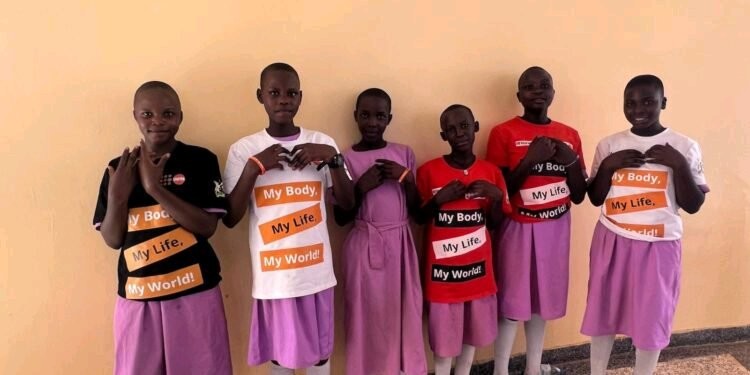
When the EYE Universal Sexual and Reproductive Health and Rights (SRHR) Project was first introduced in March 2023, many questioned whether it could truly make a difference in Busoga, one of Uganda’s most challenging regions for adolescent health. With high rates of teenage pregnancies, myths surrounding contraception, widespread absenteeism due to menstrual issues, and a lack of accessible healthcare for youth, the project had its work cut out. But now, nearing its completion, the impact of the initiative has far exceeded initial expectations, drastically improving the health and well-being of young people in the region.
The project, backed by the Royal Norwegian Embassy and implemented by UNFPA alongside Marie Stopes Uganda, CARE International, and Naguru Teenage Information and Health Centre, has aimed to address a range of health issues facing adolescents in Busoga. With a substantial investment of NOK 45,000,000 (USD 4.49 million), the three-year initiative has transformed local health facilities, schools, and communities, helping to create a healthier, more informed, and empowered generation.
In Kamuli District’s Namasagali Sub-county, the results have been nothing short of remarkable. Ms. Nshemereirwe Meble, the In-Charge at Namasagali III Health Centre, reported a 12% increase in family planning uptake and a 9% reduction in teenage pregnancies within a single year. The teenage pregnancy rate, which had been as high as 14% in 2023/2024, now stands at just 5%. This success was achieved through the retraining of healthcare workers, who were taught to provide youth-friendly, non-judgmental services, and through community outreach efforts that brought SRHR services directly to the villages.
For the first time in years, health facilities in the region have a consistent supply of SRH commodities, thanks to improved stock management. Ms. Nshemereirwe highlighted that integrating youth-led outreach into the primary healthcare work plans and mentoring healthcare workers has led to sustainable improvements. However, she also pointed out that the biggest challenge remains changing the mindset of the community, particularly the parents, who often hold rigid and judgmental views about adolescent health. The project continues to engage political, religious, and cultural leaders to help shift these attitudes.
At the district closing ceremony in Kamuli, Ms. Yudaya Babirye, Minister in the Office of the Kyabazinga, praised the project’s accomplishments and emphasized the need for men to be actively involved in tackling teenage pregnancy. She highlighted the Kyabazinga’s “Abasadani Mpango” (Men Appeal) campaign, launched in December 2024, which urges men and boys to take responsibility for preventing teenage pregnancies, both as protectors and influencers of societal norms.
In Mayuge District, the project focused on school-based SRHR interventions, particularly addressing the exclusion of children with disabilities during menstruation. Today, schools in the area, including Baliita Primary School, are proud to be inclusive. Teachers and students have embraced menstrual health education, and girls now make their own reusable pads, significantly reducing absenteeism. Boys have also been trained in hygiene and the importance of respecting bodily changes. Mr. Olupot Richard, Senior Man Teacher at Baliita, observed a sharp decline in absenteeism due to menstrual issues, a marked improvement from the past.
In Mayuge, which had previously faced one of the highest rates of teenage pregnancies and maternal mortality, the project’s outreach efforts have brought services closer to young women. Family planning uptake among women aged 16–24 has risen steadily, and for the first time in years, the district has reported zero facility-based maternal deaths. Dr. Ebogg Haji, Senior Medical Officer at Kityerera HC IV, credited the project with debunking myths surrounding family planning and improving access to vital services.
The project’s success can also be attributed to its emphasis on data-driven decision-making at the health facility level. Facilities are now undertaking improvement projects based on identified gaps, ensuring that the progress made will endure long after the project concludes. However, some leaders, including Ms. Elizabeth Kawala, Assistant District Health Officer for Maternal and Child Health, stressed the need for greater parental involvement. While the project has reduced teenage pregnancies from 25% to 22%, Ms. Kawala believes more work is needed to educate parents and schools on the importance of sexual and reproductive health education.
As the EYE Universal SRHR Project reaches its conclusion, its impact in Busoga serves as a powerful example of how integrated approaches to adolescent health—spanning schools, health facilities, and communities—can bring about meaningful change. With support from local cultural and political leadership, the project has reshaped attitudes toward adolescent sexual and reproductive health, fostering dignity, respect, and better access to essential services. UNFPA’s Deputy Representative, Mr. Daniel Alemu, summed it up perfectly: “Today’s adolescents—78% of Uganda’s population—are the future. This project ensures that young people, especially girls, have the autonomy to make decisions about their bodies and live healthy, empowered lives.” The lessons learned and the foundation laid by the project will continue to guide efforts to empower young people across Uganda and beyond.


Museveni Targets Gomba: NRM Expands Its Reach in Opposition Heartland
President Yoweri Museveni has intensified his campaign efforts ahead of the 2026 elections, taking his message to Gomba District, a...

Voters Warned: Stay Clear of Polling Stations to Protect Uganda’s Elections
The Electoral Commission (EC) has issued a stern warning to voters, urging them not to linger at polling stations after...


11 Mindset Phrases That Keep You Stuck in Financial Struggles (And What Wealthy People Say Instead)
The language you use every day shapes your reality more than you may realize. Your words reflect your mindset and...


The Odd Realities of Remote Work, 10 Quirky Truths No One Warns You About
Remote work has become the norm for millions around the globe. But with this new way of working comes a...


The Unspoken Codes of Wealth: Habits Common in Rich Homes That Baffle the Average Person
There are certain practices woven so deeply into the culture of wealthy households that they go unnoticed by those who...


9 Things Smart People Choose to Ignore at Work and Why It Helps Them Succeed
Intelligent individuals often don’t respond to everything happening around them. Not because they don’t notice, but because they understand the...


The 8 Subtle Habits of People Who Succeed Without the Hustle
There’s a quiet strength in those who achieve success without the exhausting hustle. They don’t work endless hours, live off...


11 Broke Mindset Phrases That Keep You Poor (And What Wealthy People Say Instead)
Your words shape your reality more than you realize. Moreover, the phrases you use daily reveal your money mindset and...


The Strange Reality of Working From Home: 10 Quirky Truths Nobody Talks About
Working from home has become the new normal for millions of people. However, remote work brings unexpected challenges and habits...
The Quiet Codes Of Wealth: Habits Normal In Wealthy Homes That Confuse Average People
There are certain habits that exist so deeply within the fabric of wealthy households that they go unnoticed by those...