
News
Uganda’s Young Innovators Lead the Charge at National STEM and Robotics Competition

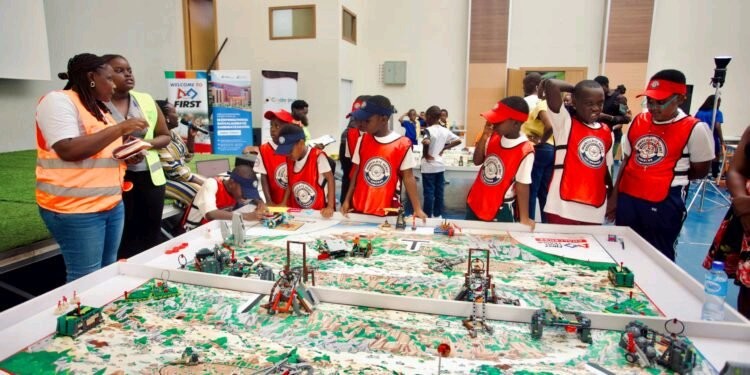
The Third National STEM and Robotics Skills Competition in Uganda saw a vibrant display of the country’s brightest young minds at Kabojja International School in Kampala. This year’s event, organized by Next Gen Restyling Limited in partnership with the World Skills Federation Uganda, attracted 380 participants from 30 schools across Uganda. The competition, which included both local and international schools, brought together a wide range of learners aged 4 to 25 who presented groundbreaking projects in robotics, engineering, electronics, and innovative hackathons.
Mellon Kenyangi, the Founder of Next Gen Restyling Ltd, emphasized that the event goes beyond just showcasing young talent—it is about fostering a generation of innovators, not job seekers. “We are building creators, not just consumers,” Kenyangi explained. She stressed the importance of equipping Uganda’s youth, who make up a large portion of the population, with the skills to think critically and solve real-world problems. Without this investment in the next generation, she warned, the country’s youth could become a ticking time bomb. The competition’s goal is to ensure these young people have the tools and confidence to drive Uganda’s future forward.
Now in its third year, the competition has blossomed from a small school event into a highly anticipated national showcase of STEM talent. This year, the event attracted attention not only from local participants but also from international visitors, including teams from Maryland and Texas. These teams contributed to the event through joint challenges and by offering training to underserved communities in Uganda. As the event grows, plans are already underway for student exchange programs in Bushenyi and Sironko districts in 2026, further expanding the reach and impact of this exciting initiative.
Despite its success, Kenyangi pointed out that the competition is still heavily reliant on partnerships with international institutions, particularly from the United States. “Innovation requires consistent and deliberate investment,” she stated, urging both the Ugandan government and the private sector to step up and support initiatives that are already proving to have a significant impact on the country’s development. The competition, which has consistently delivered results, is seen as a crucial platform for Uganda’s youth to harness their potential in the fields of technology and innovation.
The competition was further bolstered by strong backing from government stakeholders, including the Uganda Communications Commission (UCC). Christine Mugimba, Director for ICT and Research at UCC, discussed the progress made through initiatives like the Universal Communications Access Fund (UCUSAF), which has provided ICT laboratories to over 1,000 secondary schools. Mugimba emphasized the importance of exposing young people to robotics and artificial intelligence early on. “We are not going to fall behind. Our responsibility is to empower the youth to use technology to address Uganda’s challenges,” she said.
The Ministry of Education and Sports also showed its support, with Ronald Ddungu, Principal Education Officer, highlighting the focus of Uganda’s new lower-secondary curriculum on project-based learning. Ddungu pointed out that the curriculum was designed to provide students with hands-on experience in fields like robotics and engineering. “This curriculum moves learning from theory to practical application, and events like this competition fit perfectly with the direction we are heading,” he noted.
On the exhibition floor, students presented a variety of innovative solutions aimed at addressing local issues. Among the standout projects was the EcoSense Kit, a soil-moisture detection device designed by students from Greenhill Primary School Buwate to help prevent landslides. Another notable project came from Maryhill High School students, who showcased an autonomous caregiver system aimed at improving patient care and emergency response. These projects reflected the creativity and technical expertise of Uganda’s future innovators, demonstrating their ability to apply their skills to solve real-world problems.
For many teachers, the competition was more than just a showcase of talent—it was a living classroom where students brought subjects like physics, mathematics, and engineering to life. With projects addressing everything from environmental monitoring to healthcare automation, the event clearly demonstrated that Uganda’s youth are not only learning about technology but are also actively using it to make a difference. The Third National STEM and Robotics Skills Competition is a powerful testament to Uganda’s growing focus on science, technology, and innovation, and it promises an exciting future for the country’s technological development.


Museveni Targets Gomba: NRM Expands Its Reach in Opposition Heartland
President Yoweri Museveni has intensified his campaign efforts ahead of the 2026 elections, taking his message to Gomba District, a...

Voters Warned: Stay Clear of Polling Stations to Protect Uganda’s Elections
The Electoral Commission (EC) has issued a stern warning to voters, urging them not to linger at polling stations after...


11 Mindset Phrases That Keep You Stuck in Financial Struggles (And What Wealthy People Say Instead)
The language you use every day shapes your reality more than you may realize. Your words reflect your mindset and...


The Odd Realities of Remote Work, 10 Quirky Truths No One Warns You About
Remote work has become the norm for millions around the globe. But with this new way of working comes a...


The Unspoken Codes of Wealth: Habits Common in Rich Homes That Baffle the Average Person
There are certain practices woven so deeply into the culture of wealthy households that they go unnoticed by those who...


9 Things Smart People Choose to Ignore at Work and Why It Helps Them Succeed
Intelligent individuals often don’t respond to everything happening around them. Not because they don’t notice, but because they understand the...


The 8 Subtle Habits of People Who Succeed Without the Hustle
There’s a quiet strength in those who achieve success without the exhausting hustle. They don’t work endless hours, live off...


11 Broke Mindset Phrases That Keep You Poor (And What Wealthy People Say Instead)
Your words shape your reality more than you realize. Moreover, the phrases you use daily reveal your money mindset and...


The Strange Reality of Working From Home: 10 Quirky Truths Nobody Talks About
Working from home has become the new normal for millions of people. However, remote work brings unexpected challenges and habits...
The Quiet Codes Of Wealth: Habits Normal In Wealthy Homes That Confuse Average People
There are certain habits that exist so deeply within the fabric of wealthy households that they go unnoticed by those...