
Politics
Abed, Mpuuga Struggles to Draw Crowds as Democratic Front Rallies Falter Ahead of 2026 Elections

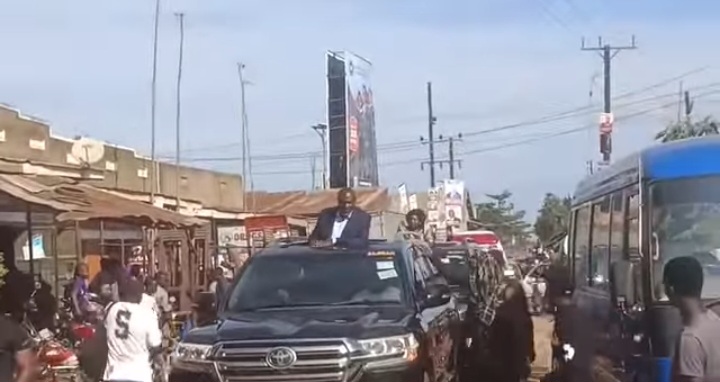
With the 2026 Ugandan elections fast approaching, pressure is mounting within the Democratic Front as two of its key figures—Mathias Mpuuga and Hon. Abed Bwanika—face unexpectedly low turnout during their recent campaign activities. What were intended to be energizing processions and rallies in several districts instead exposed a worrying lack of public enthusiasm for the party’s top contenders.
In multiple locations across the country, Mpuuga and Bwanika were met with noticeably thin crowds. Streets that were expected to fill with party supporters remained largely quiet, forcing the candidates to push through speeches to sparse audiences. The turnout was so low in some areas that only a few loyalists waving Democratic Front colors could be spotted.
For Mpuuga—currently at the helm of the Democratic Front—and Bwanika, a seasoned opposition politician, the tepid response marks a significant setback. Both leaders hoped to rely on their long-standing political reputations to reignite support, but the recent turnout suggests that their influence may be waning at a crucial moment.
Internal Concerns and Strategy Questions
The disappointing rallies have stirred debates inside the party, with insiders questioning whether the Democratic Front’s message is resonating with Ugandans. While Mpuuga is known for his bold criticism of government excesses and Bwanika for his grassroots engagement, their current strategies appear to be falling flat.
Analysts point out that the Democratic Front has struggled to distinguish itself from other opposition movements, especially the National Unity Platform (NUP). Robert Kyagulanyi (Bobi Wine) continues to dominate the opposition space with unmatched popularity, particularly among the youth. His ability to attract massive crowds has overshadowed competing figures, making it harder for other opposition leaders—Mpuuga and Bwanika included—to gain momentum.
Broader political mood complicates mobilization
Uganda’s heavily polarized political climate has also contributed to voter fatigue. Years of political tension and unfulfilled promises have led many citizens to doubt whether any opposition group can deliver meaningful change. This skepticism may be dampening enthusiasm for newly launched campaigns, including those of the Democratic Front.
Additionally, ongoing struggles within the opposition to form a united coalition have fragmented voter bases. Attempts to rally behind a single, cohesive opposition movement have repeatedly faltered, leaving figures like Mpuuga with a divided and uncertain following.
Contrasts with NUP’s momentum
While the Democratic Front faces an uphill battle, NUP continues to ride a wave of grassroots support. Kyagulanyi’s rallies regularly pull massive crowds, fueled by his focus on issues such as unemployment, corruption, and human rights violations. The contrast between NUP’s energetic public engagements and the Democratic Front’s sluggish events has become increasingly difficult to ignore.
Campaigns face funding and visibility setbacks
Weak turnout does more than hurt morale—it impacts campaign resources. Rallies serve as platforms for visibility, fundraising, and volunteer mobilization. Without strong public showings, both Mpuuga and Bwanika may face challenges in financing their campaigns and scaling operations as election day approaches.
Candidates Stay Defiant Despite Setbacks
Despite the troubling signs, both leaders have pledged to keep going. Mpuuga insists that numbers are not the only measure of commitment:
“We may be few today, but we are grounded in the belief that Uganda deserves change. We move forward,” he declared during one of the rallies.
Bwanika echoed this optimism, framing the slow start as a normal hurdle in a long campaign journey:
“Change never comes on a silver platter. We will continue speaking to the people and building a movement that reflects their hopes,” he said.
A Critical Turning Point for the Democratic Front
As the 2026 race inches closer, the party’s flag-bearers will need to revise and strengthen their strategies to remain competitive. Their ability to convert skepticism into support—and to present themselves as credible alternatives to both the NRM and the NUP—may determine whether they stay relevant in Uganda’s evolving political landscape.
For now, the low rally turnout serves as a cautionary signal: the Democratic Front must work harder to connect with voters, build unity, and offer a compelling vision if it hopes to stay in the race.

From Scholar to Supreme Gavel! Flavian Zeija Takes Charge of Uganda’s Judiciary
President Yoweri Museveni has appointed Honourable Justice Dr. Flavian Zeija as Uganda’s new Chief Justice, marking a significant transition at...

Zambali Bulasio Mukasa! From Media Desk to Parliament’s Power Seat
Zambali Bulasio Mukasa’s life has taken a dramatic turn, moving from the calm of the newsroom to the intensity of...

Uganda’s Human Rights Commission Moves to Confirm Bobi Wine’s Safety Amid Election Tensions
The Uganda Human Rights Commission (UHRC) has taken urgent action to determine the status of National Unity Platform (NUP) presidential...

Nandala Mafabi! The Accountant Who Wants to Rebalance Uganda’s Future
James Nathan Nandala Mafabi enters the presidential race as one of Uganda’s most enduring opposition figures, a man whose political...

Museveni Lifts the Lid on Busoga Power Struggles After Top NRM Leaders Skip Iganga Meeting
President Yoweri Museveni on Saturday laid bare growing fault lines within the National Resistance Movement in Busoga after a unity...

Uganda’s Education Ministry Debunks Election-Related School Calendar Rumors
The Ministry of Education and Sports in Uganda has officially dismissed recent rumors about changes to the 2026 school calendar....

Death of Renowned Lecturer in Kampala Sparks Investigation Into Unexplained Circumstances
A shocking incident has prompted the police in Kira Road Division to open an investigation following the unexpected death of...

Teso’s Revival! 76 Billion Shillings for Cattle Restocking, A Commitment by Hon. Biara Wepukhulu
Hon. Biara Emmanuel Wepukhulu has delivered a message of hope to the people of Muyonga Catholic Church in Marakaru village,...


Violence and Tragedy in Arua: Stray Bullet Injures Officer, Two Dead Amid Mob Unrest
A violent confrontation in Arua City on January 2, 2026, left two people dead and a police officer wounded, after...


St. Mary’s College Mayenze Launches Groundbreaking Half Bursary Program to Help Bright and Talented Students
St. Mary’s College Mayenze, a renowned institution in Uganda, has unveiled an innovative bursary program designed to support gifted and...